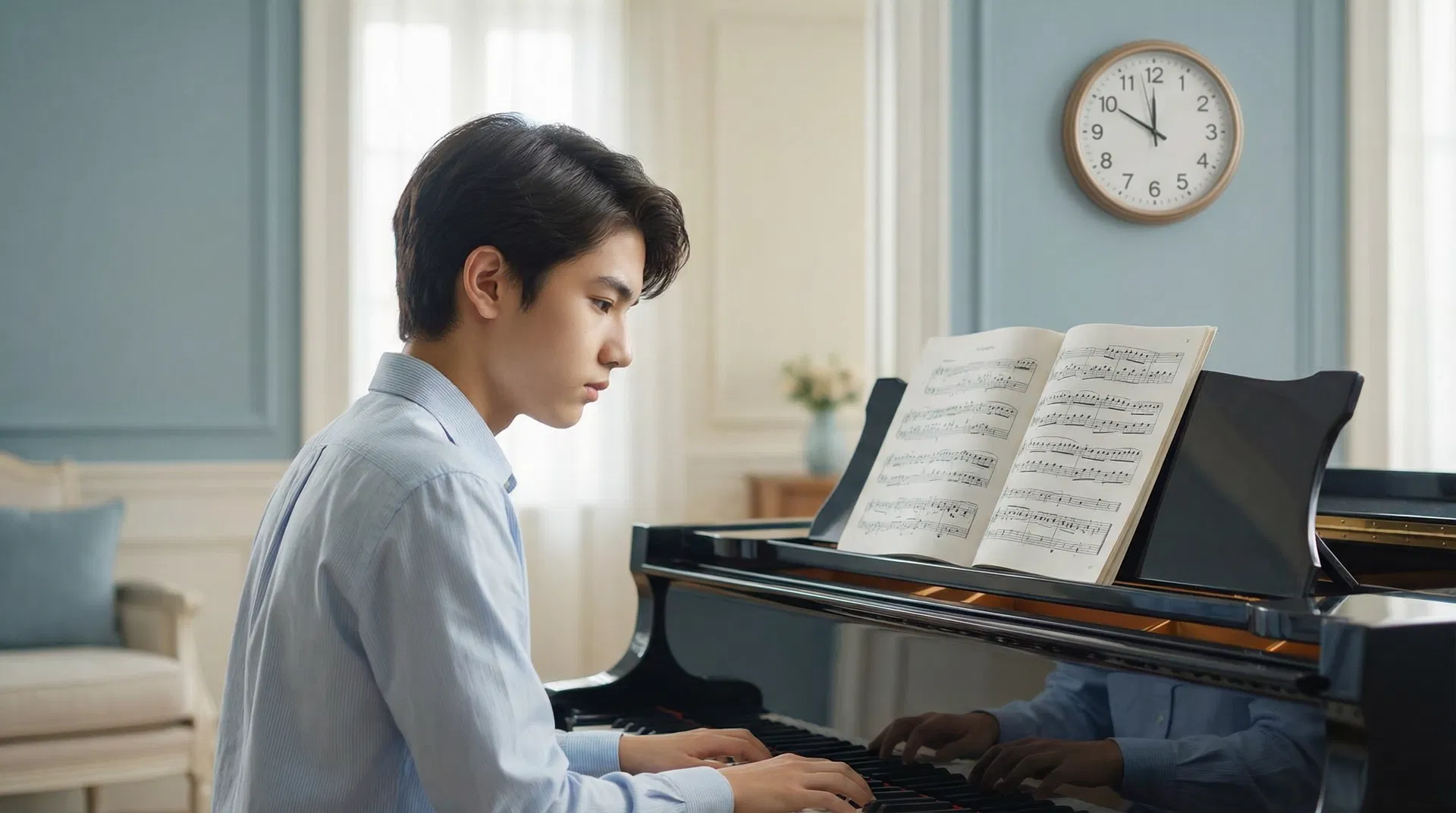
ABRSM Grades 4–8 Piano Exam Guide: Marking Criteria, Practice Methods and FAQs for Hong Kong Candidates
ABRSM Grades 4–8: The Crucial Step Towards Performance Diplomas
The Associated Board of the Royal Schools of Music (ABRSM) Grades 4–8 are important milestones for most piano students in Hong Kong. This stage of study is not just about passing exams; it is a vital period for building a solid musical foundation and preparing for future performance diplomas.
Detailed Marking Criteria
The ABRSM exam is marked out of 150. The pass mark is 100, Merit is 120, and Distinction is 130.
| Exam component | Marks allocation |
|---|---|
| Three pieces (one from each group A, B and C) | 90 marks (30 each) |
| Scales and arpeggios | 21 marks |
| Sight-reading | 21 marks |
| Aural tests | 18 marks |
Technical Requirements for Grades 4–8
Scales and arpeggios
Scales are often the area where candidates lose marks, but they are also the easiest to improve. Key requirements by grade:
Grades 4–5:
- All major and minor scales (harmonic and melodic minor)
- Double-note scales in thirds and sixths
- Primary chord arpeggios
Grades 6–7:
- Double-note scales extending to octaves
- Dominant seventh and diminished seventh arpeggios
- Chromatic scales
Grade 8:
- All of the above, plus whole-tone scales
- Increased tempo expectations (crotchet = 96–112)
Three ways to improve your scales marks
-
Daily practise to build muscle memory: Scales should be part of your daily warm-up, not something left until just before the exam.
-
Consistent fingering: Use correct and consistent fingering to avoid errors under exam pressure.
-
Control tempo and evenness: Examiners value evenness over speed. It is better to be slightly slower and even than fast and uneven.
Sight-reading
Sight-reading is one of the most challenging parts for many students. Practical methods to improve:
Pre-exam preparation strategies
-
Practise new pieces daily: Sight-reading develops over time. Spend 10–15 minutes each day sight-reading pieces of various styles.
-
Look before you play: Spend about 30 seconds scanning the piece before you start. Note:
- Key signature and time signature
- Tempo and dynamic markings
- Repeats and special notations
-
Keep a steady pulse: Even if you make mistakes, do not stop to replay. Examiners place greater value on rhythmic stability.
-
Lead with your eyes: Your gaze should be one to two bars ahead of the notes you are playing.
Aural Tests
Aural tests assess a student’s listening skills and typically include:
- Rhythmic clapping: Clap back the rhythm after hearing a melody
- Interval recognition: Identify intervals (Grades 4–8)
- Chord recognition: Identify major, minor and dominant seventh chords (Grades 6–8)
- Melodic dictation/singing: Sing back a short melody heard
- Musical style description: Describe tempo, dynamics, mood and style (Grade 8)
How to improve aural skills
- Listen daily to classical music of different styles
- Use ABRSM official practice materials and recordings for systematic training
- Cultivate an "inner ear" during practice by mentally hearing the music before playing
Repertoire Selection Advice
Group A (Baroque to Classical)
Choose works of moderate technical difficulty that display strong musical content. Common choices:
- Bach: English Suites, French Suites, Well-Tempered Clavier
- Haydn, Mozart: sonata movements
- Beethoven: early sonata movements
Group B (Romantic)
This group is often most familiar to students but can lose structural clarity if over-romanticised. Recommended repertoire:
- Chopin: Nocturnes, Études, Preludes
- Schumann: Kinderszenen, Character pieces
- Liszt: Concert Études (Grade 8)
Group C (20th century to contemporary)
Many students overlook this group, but modern pieces can leave a strong impression on examiners. Recommended repertoire:
- Prokofiev: Sonatas, Visions
- Bartók: Mikrokosmos selections
- Debussy: Preludes and other impressionistic works
Frequently Asked Questions by Hong Kong Candidates
Q: How long until ABRSM results are released? A: Results are usually issued 4–6 weeks after the exam.
Q: If I fail, can I retake immediately? A: You can, but it is advisable to discuss the weak areas with your teacher and make targeted improvements before re-entering.
Q: What comes after Grade 8? A: Grade 8 is the highest graded exam in ABRSM. The next step is typically to prepare for performance diplomas such as ARSM, LRSM or LTCL.
How to Choose the Right Piano Teacher
Selecting the right teacher is crucial when preparing for ABRSM Grades 4–8. An ideal teacher should:
- Hold a performance diploma or a music degree
- Have extensive ABRSM tutoring experience
- Provide specific, targeted guidance on students’ weaknesses
- Arrange regular mock exams
Tin Pui Piano Academy’s elite teaching team all hold international qualifications at diploma level or above and have rich experience in ABRSM exam coaching. Our students frequently achieve outstanding results, often scoring above 140 in ABRSM exams.
If you would like to learn more, please Contact us to arrange a free assessment call.
Ready to begin your piano journey?
See how one-to-one study can begin from the learner’s level, goals and practice conditions.