The Three Most Important Piano Practice Methods: Slow Practice, Listening, and Correct Posture
Many students practise for an hour a day yet make slow progress, and sometimes their playing gets worse. The problem is often not insufficient practise time but incorrect practise methods. From Tin Pui Piano Academy’s years of teaching experience, we find that most students’ progress bottlenecks stem from the following three core issues.
1. Slow practice: the most overlooked efficient method
"My teacher told me to practise slowly, but I’m already very slow!" This is the most common remark from students. However, true slow practise is not simply reducing speed; it is about giving the brain enough time to process every detail of each note.
Why is slow practise so important?
Piano playing relies on muscle memory. When you practise quickly, the brain cannot process mistakes in time, and the muscles will memorise the incorrect movements. Once an incorrect muscle memory is formed, correcting it often takes more than three times the effort of learning it correctly in the first place.
The correct way to slow practise
Step 1: Identify the difficult sections Do not slow-practise the entire piece from start to finish. First locate the two or three most difficult passages and concentrate on those.
Step 2: Slow down to a speed where mistakes are impossible Slow down until every note can be played clearly and accurately. If mistakes still occur, slow further.
Step 3: Increase speed gradually Only after playing a passage successfully three times should you slightly increase the tempo. Do not rush—the solid foundation built by slow practise is the shortcut to rapid improvement.
Step 4: Practise hands separately For difficult passages, practise the left and right hands separately first. Once each hand is secure, combine them.
Tin Pui teaching insight: Our students preparing for ABRSM Grade 8 or performance diplomas often return to slow practise in the two months before their exam. This ‘one step back, two steps forward’ approach is the key to achieving excellent results in performances and examinations.
2. Listen with your ear: active listening vs passive playing
Many students practise with their eyes glued to the score while their fingers move mechanically, never truly listening to their own playing. This kind of “passive playing” is one of the biggest obstacles to progress.
The three levels of active listening
Level 1: Pitch and rhythm The most basic listening—are the notes accurate? Is the rhythm steady? Use a metronome to help, but do not rely on it entirely.
Level 2: Tone and dynamics A more advanced level—does the sound please the ear? Are the contrasts in loudness clear? The same note, struck with different touch, can produce very different tones.
Level 3: Musical expression The highest level—do the phrases breathe? Is the emotion conveyed genuinely? This requires a deeper understanding of the piece’s background and style.
Practical exercise: record and listen back
At least once a week, record your playing on your phone, then listen back from the perspective of an audience member. You will notice many issues you missed while playing—this is one of the most effective ways to improve musical expression.
Tin Pui teaching insight: Mr Tin Pui Tang particularly emphasises the concept of “singing internally” in his teaching—before playing, sing the melody and its colour and emotion in your mind, then let your fingers realise it. This approach stems from the teaching philosophy of Israeli piano master Arie Vardi and is central to developing expressive playing.
3. Correct posture: prevent injury and improve efficiency
Piano playing places considerable demands on the body. Incorrect posture not only affects performance quality but, over time, can lead to chronic injuries in the wrists, elbows and even the neck and shoulders.
Basic requirements for sitting posture
Chair height When seated, the forearms should be level with or slightly inclined downwards towards the keyboard. The elbows should not be significantly higher or lower than the keyboard.
Where to sit Sit on the front half of the bench; do not lean against the backrest. Keep both feet flat on the floor (children may use a footstool).
Distance from the keyboard Maintain a suitable distance—when the arms are naturally extended, the fingers should rest comfortably on the keys without needing to overreach or curl unnaturally.
Key points for hand posture
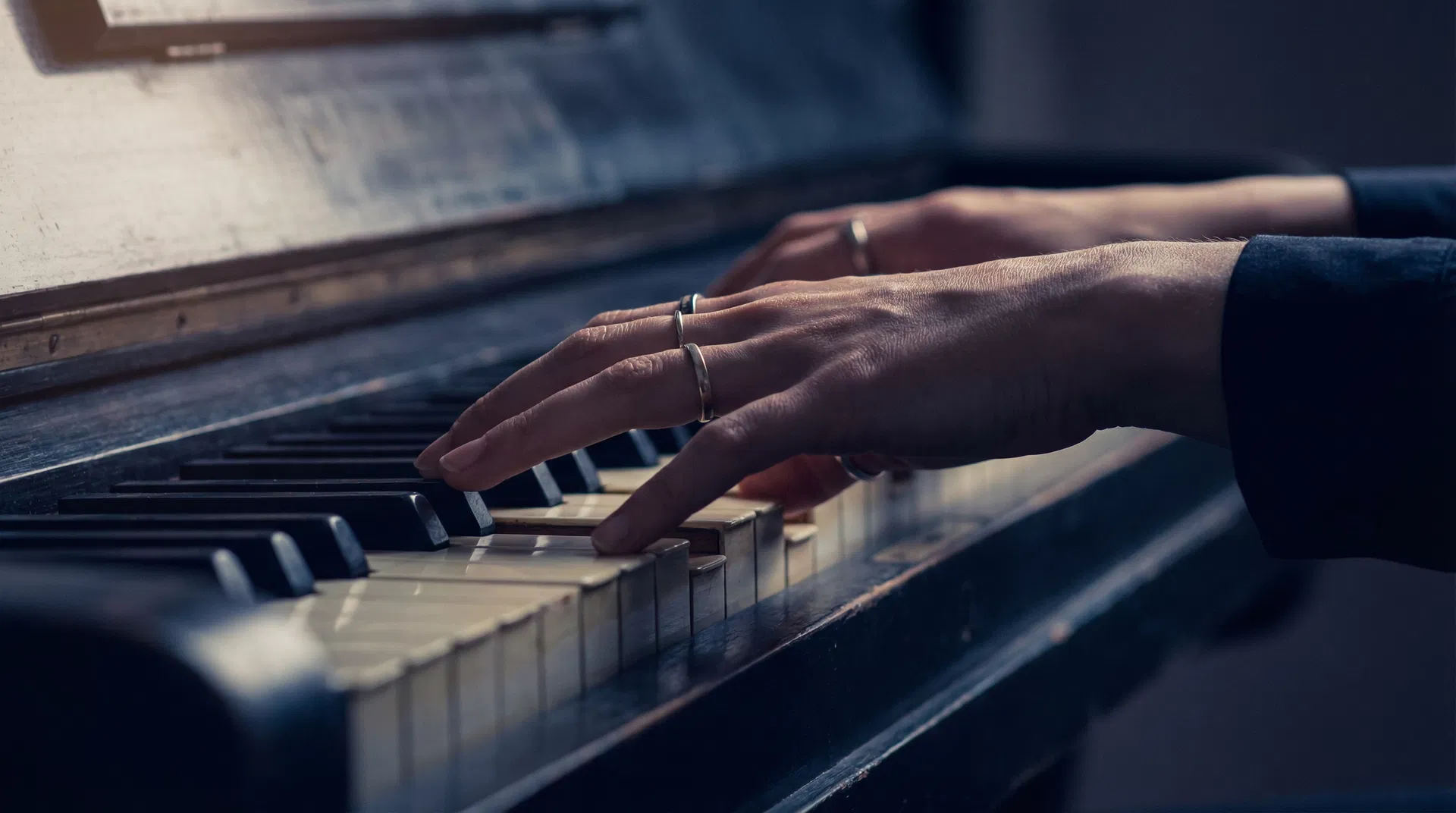
Relaxed wrists The wrists should remain naturally relaxed, not rigid or drooping. Imagine the wrist as a spring, able to move flexibly up and down.
Finger curvature Fingers should keep a natural curve, as if lightly holding an orange. Avoid fingers that are too flat or overly curled.
Thumb position The thumb should be placed on the side of the white keys, not pressed over the top of the keys.
Common posture problems and corrections
| Problem | Cause | Correction |
|---|---|---|
| Drooping wrist | Weak finger strength | Strengthen finger independence exercises |
| Tense shoulders | Bench too low or psychological tension | Adjust bench height; do shoulder and neck relaxation before practising |
| Overly flat fingers | Habitual issue | Do finger curvature exercises at the start of each practise session |
| Body swaying | Rhythm issues or habit | Increase body awareness; ask the teacher to remind you when necessary |
Important note: If you experience pain in your wrists, elbows or shoulders after practising, stop immediately and consult your teacher. Persistent pain may signal an injury—do not ignore it.
Conclusion: the synergistic effect of the three methods
Slow practise, listening with the ear, and correct posture do not exist independently; they complement one another:
- Slow practise gives the brain time to build correct muscle memory
- Listening ensures the muscle memory is guided in the right direction
- Correct posture allows the body to practise sustainably and efficiently without injury
At Tin Pui Piano Academy, we establish correct practising habits from the very first lesson. We believe good practise methods are more important than the number of hours spent practising—thirty minutes of high-quality practise daily often outweighs two hours of mechanical repetition.
If you would like to learn more about piano learning methods or seek professional piano tuition for your child, please contact Tin Pui Piano Academy to arrange a free assessment call.
Tin Pui Piano Academy is run by Mr Tin Pui Tang, a full-scholarship recipient of the Royal Academy of Music (UK) and a pupil of international piano master Arie Vardi. The Academy offers comprehensive piano programmes from beginner to performance diplomas (ATCL, LTCL, FTCL, ARSM, LRSM, FRSM).
Ready to begin your piano journey?
See how one-to-one study can begin from the learner’s level, goals and practice conditions.